 01
01
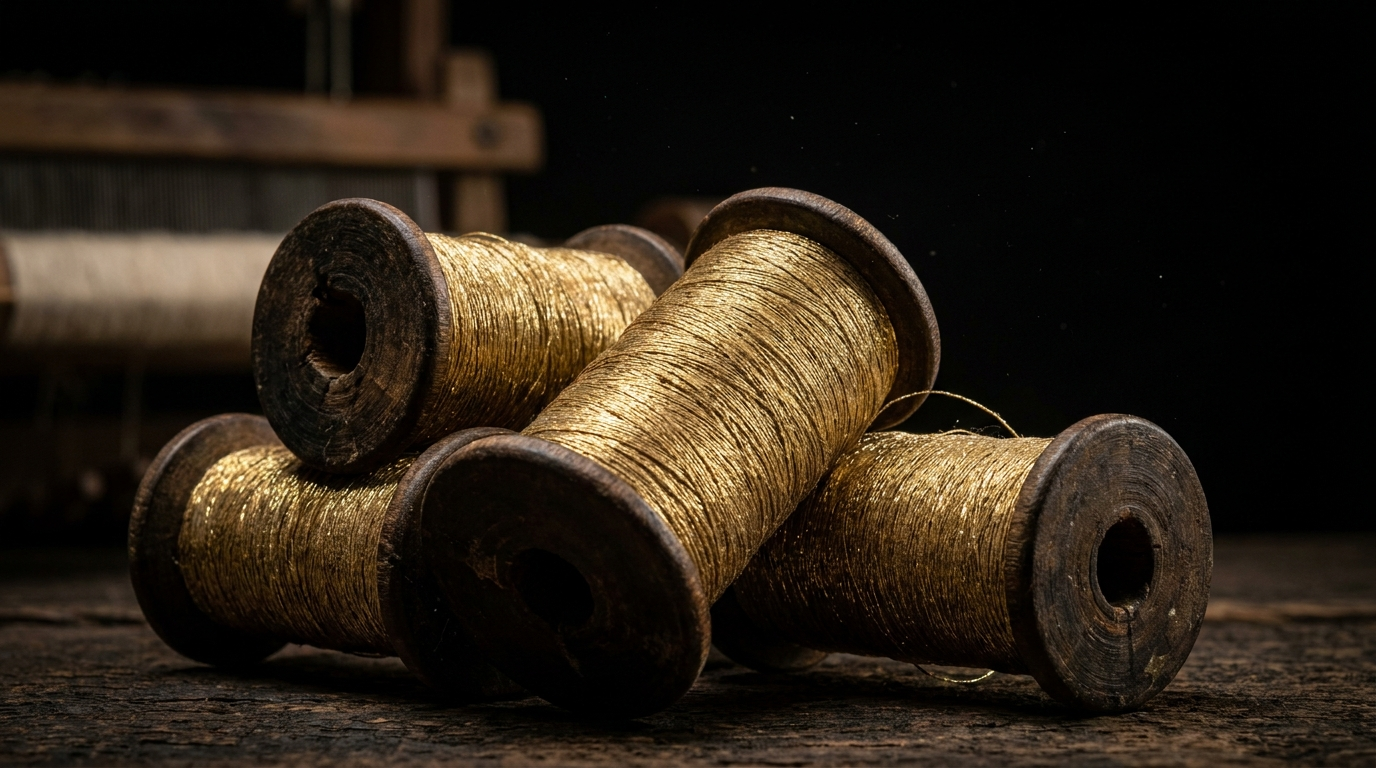
Thread Preparation
Selecting and preparing the finest threads.
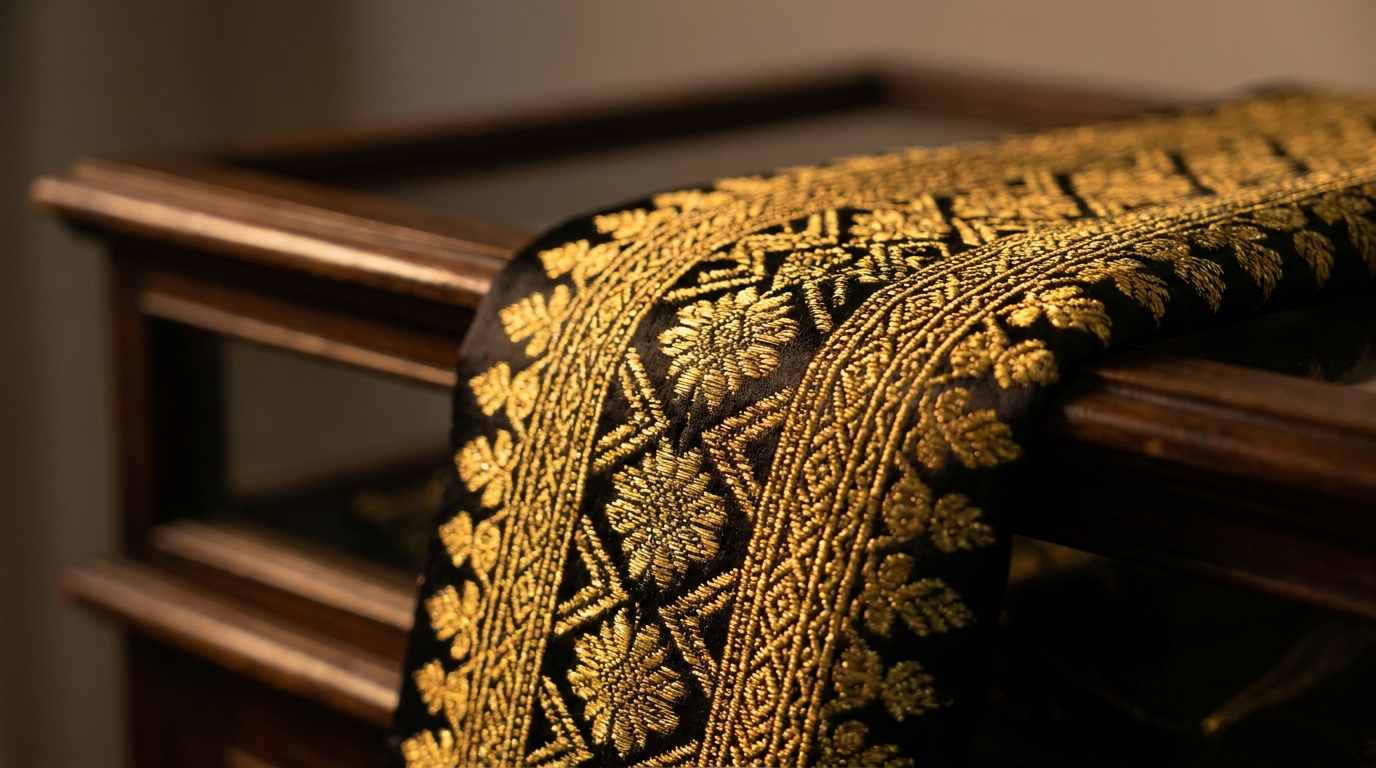
Songket is a traditional handwoven textile renowned for its intricate patterns and luxurious metallic threads. It reflects the artistry, identity, and cultural heritage of the Malay community, especially in Terengganu.
The roots of Songket in Malay tradition.
A textile of nobility, worn by royalty.
Handcrafted with skill, patience and devotion.
Preserving our heritage for the future.
How centuries of trade, diplomacy and artistry across the Malay world shaped one of Southeast Asia's most treasured textiles.
The magnificence of the Malay courts was expressed through many aspects of royal life, including architecture, ceremonies, customs, and especially textiles. Luxurious fabrics such as songket, limar songket, decorative cloths, waistcloths, headcloths, sarongs, shawls, and other ceremonial garments formed an essential part of court attire. These textiles were worn by sultans, members of royal families, aristocrats, and court officials during important occasions and public ceremonies.
Historical photographs preserved in palaces, museums, and private collections provide valuable visual evidence of this tradition. Many of these photographs, taken from the nineteenth century onwards, portray rulers and members of the Malay elite dressed in elaborate garments woven from silk and decorated with gold thread. They reveal not only the appearance of royal dress but also the importance of textiles as symbols of authority, prestige, and wealth.
The photographs document a world in which textiles occupied a central place in court life. Royal installations, weddings, birthday celebrations, state ceremonies, and other formal events frequently featured the use of richly decorated fabrics. The grandeur displayed through these occasions reflected both the status of the ruler and the artistic achievements of Malay textile traditions.
Among the many luxurious fabrics associated with the Malay courts, songket held a particularly distinguished position. It became one of the most visible symbols of royal prestige and was regarded as one of the finest textile traditions in the Malay world. Songket was not merely a form of clothing. It represented social rank, political authority, and cultural refinement.
Historical evidence confirms that songket and related textiles formed a dominant feature of life within the royal courts of the Malay Peninsula. Their presence can be traced back several centuries, although scholars continue to debate the exact origins of songket and the period during which it first emerged. While definitive conclusions have not yet been reached, researchers generally agree that the development of songket was influenced by extensive trade networks linking the Malay world with India, China, Arabia, and Persia.
The story of songket is therefore closely connected to the broader history of trade, cultural exchange, and political power in Southeast Asia. Through centuries of interaction with foreign merchants and neighbouring kingdoms, the Malay world acquired new materials, technologies, artistic ideas, and weaving techniques that contributed to the evolution of one of its most celebrated cultural treasures.
To understand the emergence of songket, it is necessary to examine the wider history of trade and cultural exchange in Southeast Asia. The Malay Peninsula occupied a strategic position between India and China and became one of the most important crossroads of maritime commerce in Asia. For centuries, merchants travelled through the region in search of rare and valuable commodities, transforming the Malay world into a vibrant centre of economic and cultural interaction.
The forests of Southeast Asia were renowned for their abundance of highly prized products. Among these were camphor, agarwood, sandalwood, resins, waxes, and rattan. The seas provided pearls, shellfish, edible seaweed, and cowrie shells, while the land yielded valuable mineral resources such as tin, iron, and gold. These products attracted traders from distant regions and contributed significantly to the prosperity of local kingdoms.
The geographical location of Southeast Asia further enhanced its importance. Situated along major monsoon routes that connected East and West, the region became a natural meeting point for merchants travelling between India, China, the Middle East, and other parts of Asia. Trading centres emerged throughout the region, serving not only as commercial hubs but also as places where ideas, technologies, artistic traditions, and cultural practices were exchanged.
Local rulers benefited greatly from this international trade. Through their control of ports and commercial networks, they gained access to imported luxury goods, including ceramics, metalware, jewellery, beads, and fine textiles. These imported objects became symbols of status and prestige and were often displayed within royal courts to demonstrate wealth, power, and connections to the wider world.
Among the earliest and most influential trading partners of the Malay world was India. Historical evidence suggests that maritime connections between the Malay Peninsula and the Indian subcontinent had already been established by the third century CE. Archaeological discoveries, including inscriptions, religious sculptures, beads, and other artefacts, provide strong evidence of these long-standing relationships.
Indian influence extended beyond commerce. Concepts of kingship, ceremonial practices, language, religion, and court culture entered the Malay world through centuries of interaction. Elements of Sanskrit became deeply embedded within the Malay language, while aspects of royal protocol and governance reflected Indian traditions.
Textiles formed an important component of these exchanges. Cotton fabrics, weaving methods, decorative motifs, and luxury cloths were introduced through Indian trade networks. Over time, local communities adapted these influences and integrated them into their own artistic traditions. This process laid important foundations for the later development of sophisticated Malay textiles, including songket.
The relationship between the Malay world and China also played a significant role in shaping regional culture and commerce. From at least the fifth century onward, Chinese courts and merchants sought valuable products from Southeast Asia. Aromatic woods, spices, medicinal substances, ivory, exotic animal products, and numerous luxury items were exported to China through extensive maritime trade networks.
In return, Chinese merchants introduced goods that would have a lasting impact on local societies. Among the most significant of these was silk. The availability of imported silk transformed textile production across the region and provided local weavers with new materials through which they could create more refined and prestigious fabrics.
The influence of China was therefore not limited to trade alone. Through the movement of people, goods, and ideas, Chinese connections contributed to the development of artistic traditions that eventually became part of the cultural heritage of the Malay world.
By the fifth and sixth centuries, a number of trading kingdoms had emerged throughout Southeast Asia. Among the most significant was Langkasuka, a kingdom believed to have been located in the northern part of the Malay Peninsula.
Historical records indicate that Langkasuka maintained diplomatic relations with neighbouring states and participated actively in regional trade. The kingdom possessed a sophisticated court culture that included weaving, metalworking, woodcarving, music, dance, and ceremonial performances.
Kelantan and Terengganu are frequently associated with the legacy of Langkasuka. Their historical connections to this kingdom have led many scholars to regard them as important centres in the evolution of Malay weaving traditions. The existence of an established court culture in these regions suggests that textile production had already achieved considerable sophistication long before the emergence of later Malay states.
Between the seventh and thirteenth centuries, the Srivijayan Empire became the dominant political and commercial power in much of the Malay world. Based in Palembang, Sumatra, Srivijaya controlled strategic maritime routes and facilitated trade across a vast geographical area.
Its influence extended beyond commerce. The empire became an important centre of learning, religion, and cultural exchange. Through its extensive network of connections, goods, technologies, artistic ideas, and skilled artisans moved between different regions of Southeast Asia.
These interactions contributed significantly to the spread of weaving knowledge, textile materials, and decorative traditions. Many scholars believe that the foundations of later Malay textile culture, including songket weaving, were strengthened through the commercial and cultural networks established during the Srivijayan period.
The rise of Melaka during the fifteenth century marked a major turning point in the history of the Malay world. Positioned strategically along international shipping routes, Melaka rapidly developed into one of the most important trading centres in Asia.
Merchants from India, China, Arabia, Persia, and numerous other regions gathered in the city to exchange goods and establish commercial relationships. Contemporary descriptions portray Melaka as a cosmopolitan port where many languages were spoken and where luxury products from across the world could be found.
Among the most important imports were textiles. Silk fabrics, brocades, velvets, gold-threaded cloths, and other luxury materials entered the Malay world through Melaka's markets. These imported fabrics represented some of the finest textile traditions of Asia and exposed local artisans to new materials, techniques, and decorative styles.
The constant flow of luxury textiles into Melaka encouraged innovation among local weavers. Foreign influences were gradually adapted to local tastes and cultural values, contributing to the emergence of distinctive Malay textile traditions. Through this process, the foundations were laid for the development of songket as one of the most prestigious forms of textile art in the region.
01
Selecting and preparing the finest threads.
 02
02
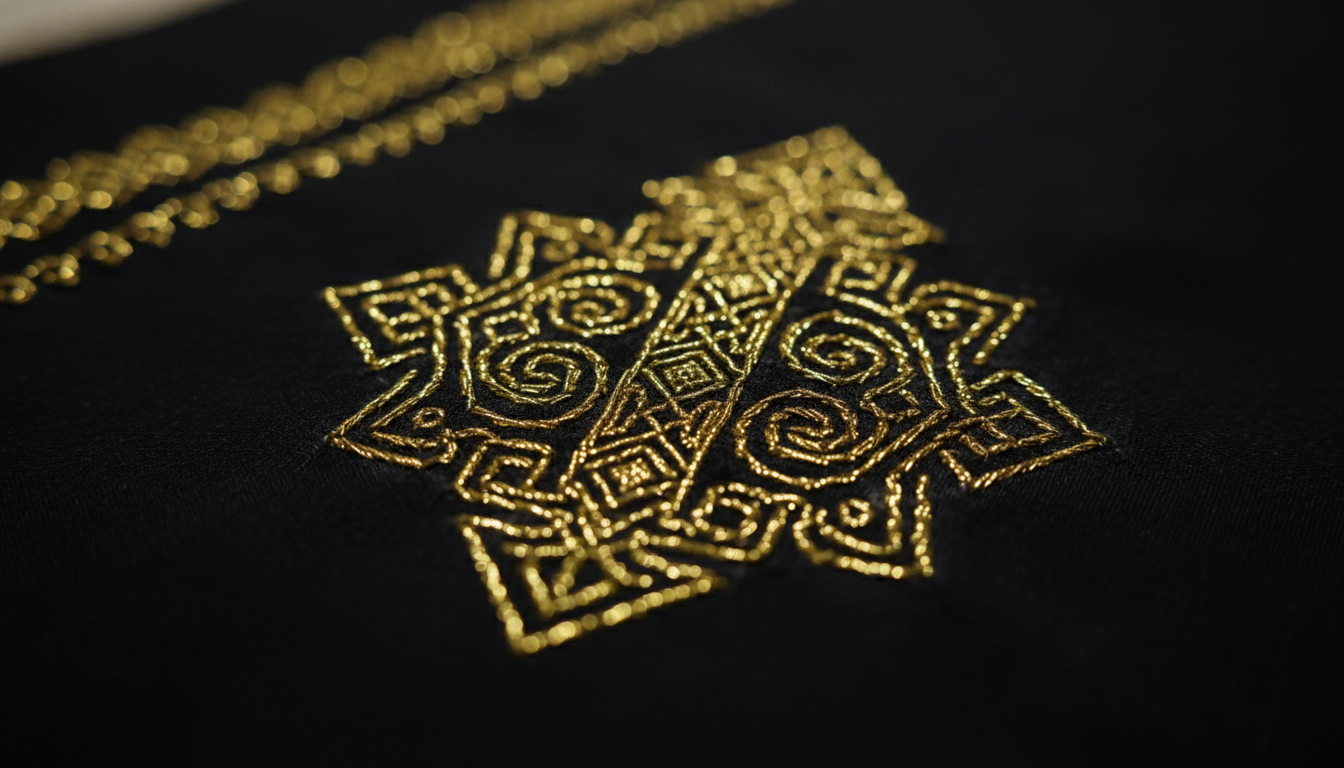
Designs are carefully arranged before weaving begins.
 03
03
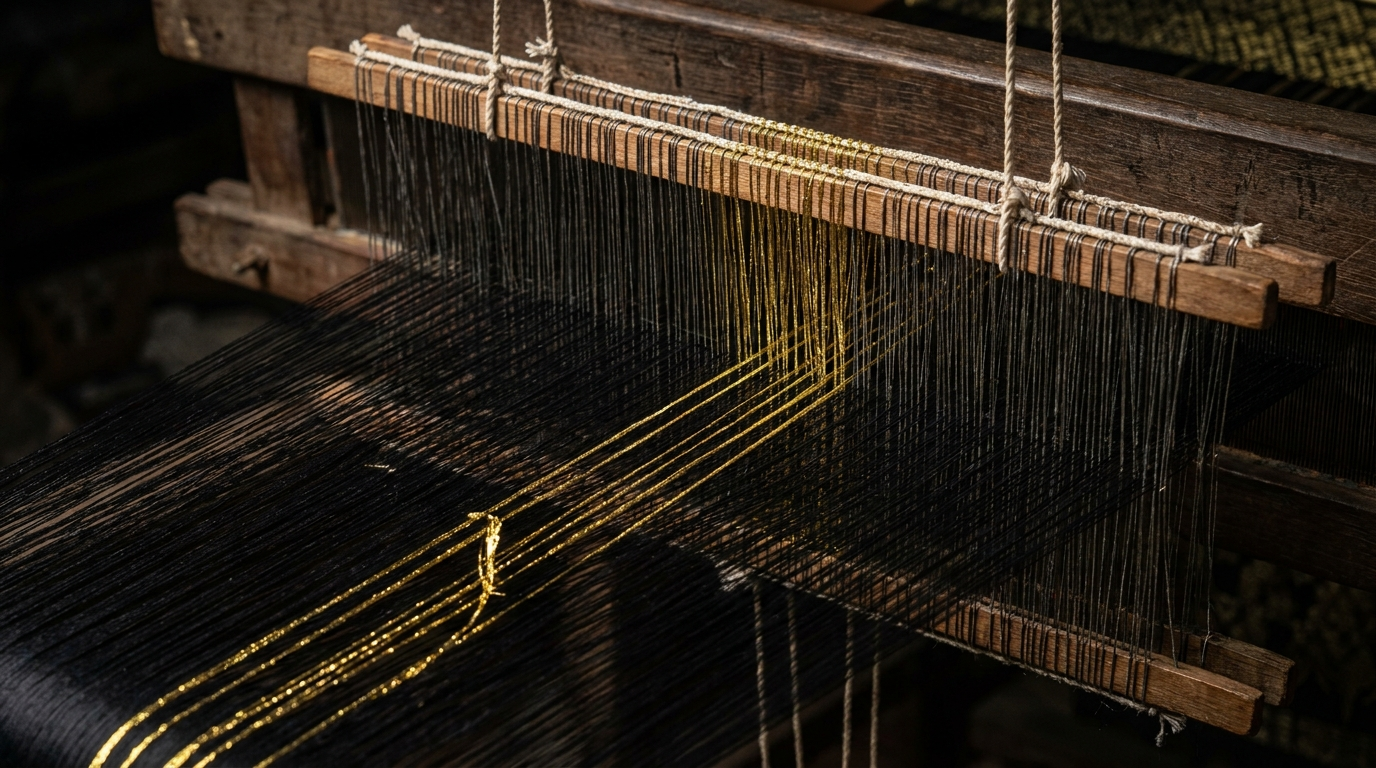
Skilled hands weave intricate motifs with precision.
 04
04
A masterpiece of heritage, rich in beauty and meaning.
Songket weaving is a traditional craft that demands patience, precision and exceptional skill. Each stage — from preparing the threads to weaving the final motifs on a Malay frame loom — shapes the beauty and uniqueness of the finished textile.
The process begins with the preparation and colouring of the threads. Cotton, silk, gold, or silver metallic threads may be used in the production of songket. Before weaving can commence, the cotton and silk threads are dyed according to the desired colours.
The dyes are dissolved in boiling water, and the threads are immersed in the solution. The threads are stirred until the colour is evenly absorbed. Once the dyeing process is completed, the threads are rinsed with clean water and left to dry thoroughly before being used in the subsequent stages.
After drying, the threads are transferred from larger skeins into smaller bobbins. This process is carried out using traditional tools known as the rahat and guwing.
The threads are carefully wound onto bamboo stem bobbins to prepare them for weaving. Proper winding ensures that the threads remain organised and can be handled efficiently throughout the weaving process.
The filled bobbins are arranged on a warping frame to prepare the warp threads. During this stage, the threads are measured and arranged according to the required length and width of the cloth.
This process establishes the foundation of the textile and determines the dimensions of the finished piece.
Once the warp threads have been arranged, they are wound onto a warping board according to the required length and width of the fabric.
Accuracy during this stage is essential, as the arrangement of the warp threads directly affects the quality, balance, and uniformity of the final cloth.
The warp threads are then inserted through the dents of a reed using a threading needle. After passing through the reed, the threads are attached to the cloth beam.
This stage ensures that the threads are evenly distributed and properly aligned before weaving begins.
The warp threads are separated into two layers, an upper layer and a lower layer. This arrangement creates an opening through which the weft thread can later pass during weaving.
The process is essential for producing a smooth, balanced, and consistent weave.
One of the most important stages in songket production is the creation of motifs. During this process, coconut frond ribs or nibung strips are inserted between selected warp threads according to the desired design.
The arrangement of these strips determines the pattern that will appear on the finished cloth. Once the motif has been established, the strips are removed, leaving the prepared structure for the decorative design.
This stage requires considerable skill and concentration, as the beauty of the songket depends greatly on the precision and complexity of its motifs.
The weaving process begins when the treadles of the loom are operated to separate the warp threads. The weft thread is then passed repeatedly through the opening created between the two layers of warp threads.
At the same time, the weaver carefully incorporates the prepared motifs into the fabric. Gold, silver, or coloured supplementary threads are inserted to create the decorative patterns that distinguish songket from ordinary woven textiles.
This stage demands patience, accuracy, and full concentration, particularly when producing complex motifs and intricate designs.
Songket is traditionally woven using a Malay frame loom constructed primarily from wood. The loom consists of several important components, including the cloth beam, warp beam, heddles, reed, treadles, and beater.
The loom functions by raising and lowering groups of warp threads to create an opening through which the weft thread passes. Decorative motifs are produced through the supplementary weft technique, where coloured or metallic threads are inserted during weaving to create intricate patterns.
The complexity of this technique, together with the precision required to create detailed motifs, makes songket one of the most refined and highly valued traditional textile arts of the Malay world.
A symbol of our history, traditions and values passed down through generations.
Intricate motifs and luxurious threads showcase timeless craftsmanship.
Reflects the creativity, unity and identity of the Malay community.
Our responsibility today to inspire and preserve Songket for tomorrow.
Songket is more than a traditional textile. It is a symbol of cultural identity, artistic excellence and the rich heritage of the Malay world — preserving traditions, reflecting social values and showcasing the creativity and craftsmanship of skilled weavers.
Songket represents a living heritage that has been passed down through generations. The knowledge of weaving, motif creation, colour selection, and textile production has been preserved through families and communities, ensuring the continuity of traditional craftsmanship. As one of the most recognised textiles in the Malay world, songket serves as an important link between the past and the present.
The production of songket requires specialised knowledge and techniques that have been developed over centuries. Every stage of the weaving process reflects the expertise, patience, and dedication of the weaver. By preserving songket, valuable traditional knowledge and craftsmanship are safeguarded for future generations.
The motifs found in songket are inspired by elements of nature, including flowers, leaves, bamboo shoots, clouds, and geometric forms. These motifs reflect the values, beliefs, aesthetics, and worldview of Malay society. Through its patterns and designs, songket tells stories about cultural traditions, local wisdom, and the relationship between people and their environment.
Historically, songket was closely associated with royal courts and aristocratic communities. It was worn by sultans, members of royal families, and nobles during important ceremonies and state occasions. As a result, songket became a symbol of prestige, dignity, authority, and refinement. Its association with royal heritage continues to enhance its cultural significance today.
Songket contributes to the sustainability of traditional craft industries and provides economic opportunities for artisans and weaving communities. The continued appreciation of songket supports local craftsmanship, promotes cultural entrepreneurship, and encourages the preservation of traditional weaving practices.
Songket serves as an educational resource that helps people understand the history, culture, and artistic traditions of the Malay world. Through exhibitions, museums, cultural programmes, and educational initiatives, songket introduces younger generations to their heritage and encourages greater appreciation of traditional arts.
Today, songket is widely recognised as one of the most treasured textile traditions in Southeast Asia. It represents the creativity, resilience, and cultural achievements of generations of artisans. As both a work of art and a cultural symbol, songket continues to inspire pride, strengthen cultural identity, and preserve an important legacy for future generations.
In essence, songket matters because it is not merely a fabric — it is a woven expression of history, heritage, craftsmanship, identity and cultural continuity.